
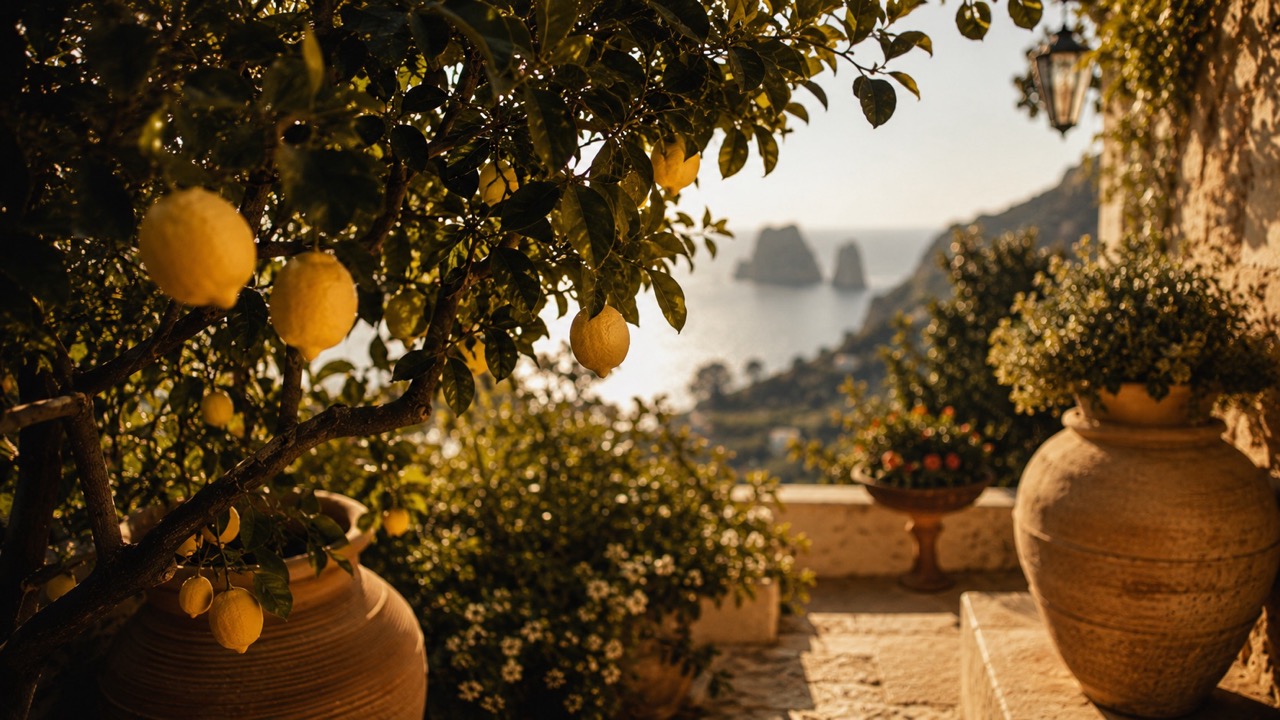
The most consequential distance in gastronomy is the one between the garden and the kitchen. At the restaurants where this distance has been eliminated — where the chef steps outside, cuts what the soil has produced that morning, and returns to a kitchen whose menu is written by the season rather than by design — something fundamental changes in the relationship between cook and ingredient. The vegetable is not a commodity ordered from a supplier’s list. It is a specific organism, grown in specific soil, harvested at a specific moment of ripeness, and the chef who has watched it develop from seed to plate possesses a knowledge of its character that no amount of market shopping can replicate.
Le Manoir aux Quat’Saisons: Raymond Blanc’s Living Laboratory
The gardens at Blanc’s Oxfordshire property are not an amenity; they are the engine of the restaurant’s philosophy. Two acres of organic kitchen gardens, developed over four decades, supply the kitchen with more than ninety varieties of vegetables and seventy varieties of herbs — a biodiversity that would have been unremarkable in a nineteenth-century potager but that represents, in the context of contemporary restaurant supply chains, something close to a radical act. Blanc, who grew up in a farming family in Franche-Comté, speaks of the garden not as a source of ingredients but as a teacher: the garden decides what is ready, and the menu follows.
The Japanese garden, the herb garden, the mushroom valley, and the orchard that surrounds the main beds create a landscape of considerable beauty, and guests who walk the gardens before lunch — as Blanc encourages them to do — arrive at the table with a sensory preparation that enhances the meal in ways that are real if difficult to quantify. The connection between the plate and the place is visible, tangible, and, in the best sense of the word, grounding.
Azurmendi: Eneko Atxa’s Basque Greenhouse
At Azurmendi, on a hillside outside Bilbao, Eneko Atxa has built a restaurant around a greenhouse. The building itself — designed by the architect Naia Eguia — integrates the growing spaces with the dining spaces so thoroughly that the boundary between garden and kitchen becomes a matter of architectural interpretation rather than physical separation. The greenhouse, which occupies the ground floor, produces the herbs, microgreens, and edible flowers that appear on every plate; the dining room above it looks down through glass floors onto the growing beds below. The effect is not theatrical but philosophical: it makes visible the proposition that eating and growing are parts of a single continuous activity.
Mugaritz: The Wild Garden at the Edge of the Forest
Andoni Luis Aduriz’s restaurant in the hills above San Sebastián maintains not a conventional kitchen garden but a network of foraging routes and cultivated wild beds that blur the distinction between agriculture and ecology. The restaurant’s dedicated team of foragers works the surrounding forests, meadows, and coastline daily, returning with ingredients — wild herbs, mushrooms, sea plants, flowers — whose availability is determined entirely by what the landscape offers. The cultivated areas around the restaurant extend this philosophy: Aduriz grows herbs and vegetables using techniques that mimic natural ecosystems, intercropping species to encourage biodiversity and allowing a degree of wildness that conventional horticulture would consider untidy. The plates that result — often challenging, always distinctive, invariably rooted in a specific place and a specific moment — represent a form of gastronomy that could not exist without this intimate, daily relationship with the land.
Blue Hill at Stone Barns: Dan Barber’s Agricultural Vision
Barber’s restaurant in the Hudson Valley operates within a working farm whose scale — eighty acres of diversified agriculture — dwarfs the kitchen gardens of most chef-garden enterprises. The distinction is deliberate: Barber’s project is not a restaurant with a garden but a farm with a restaurant, and the difference in emphasis produces a fundamentally different cuisine. The menu is driven not by the chef’s desire for a particular ingredient but by the farm’s need to use what it has produced — including the less glamorous crops that healthy soil rotation demands. A plate of winter squash at Blue Hill is not merely delicious; it is a by-product of an agricultural system whose health depends on the squash being grown, harvested, and eaten.
Babylonstoren: The Cape Winelands’ Edible Paradise
The garden at Babylonstoren, a seventeenth-century Cape Dutch farm in the Franschhoek Valley, is among the most beautiful productive gardens in the world — eight acres of fruit, vegetables, herbs, and indigenous plants arranged in a geometry inspired by the Company’s Garden that the Dutch East India Company established in Cape Town in 1652. The restaurant Babel, set in the restored cattle shed, serves a cuisine of radical simplicity: what the garden produces, the kitchen prepares, with minimal intervention and maximum respect for the ingredient’s own character. A tomato salad at Babel — made from varieties grown specifically for flavour rather than transport durability, dressed with olive oil from the estate’s own trees — is a reminder that the most profound gastronomy is sometimes the least complicated, provided the distance between garden and plate is measured in footsteps rather than food miles.